The Other Driver Was at Fault: Does Their Insurance Have to Pay Me? A Step-by-Step Guide
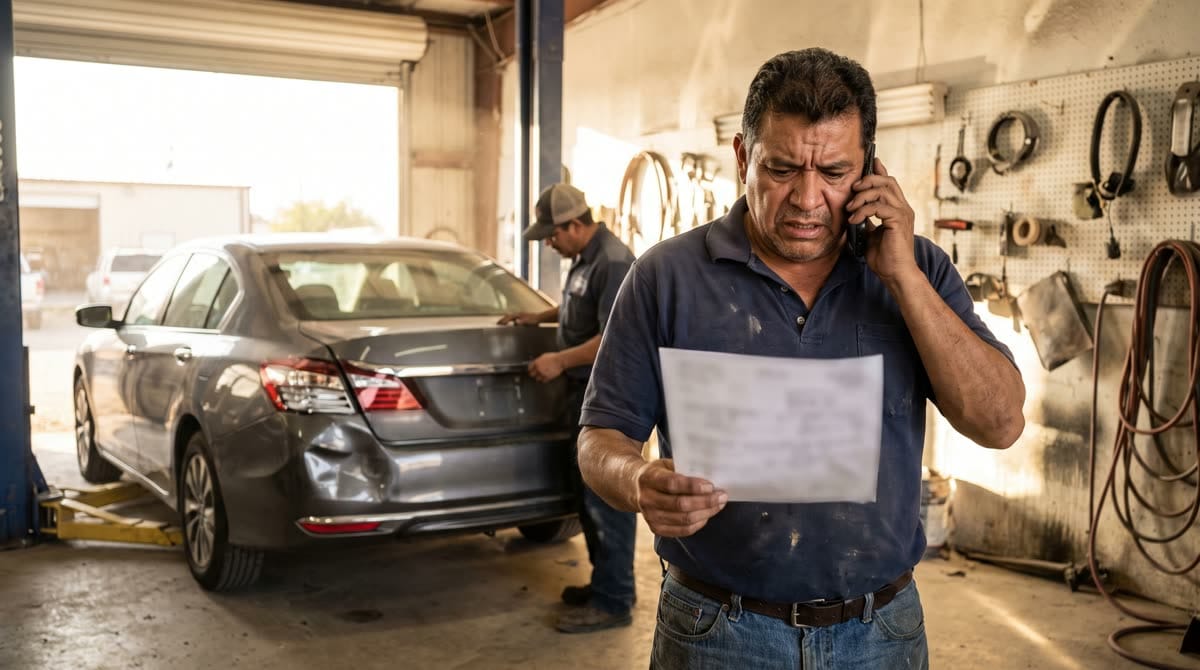
Yes. Texas is an at-fault state, so the other driver's insurer should cover the repair or value of your car, a rental or loss of use for a reasonable time, and your injuries. You pay no deductible and you choose the repair shop. But their insurer works for their customer, not for you: you don't have to give a recorded statement, and it pays to keep the car claim separate from your injury claim.
You were in your lane, the other driver ran the stop sign, and the police report says so. You'd expect their insurer to call and make it right. Reality is usually different: nobody calls back, you get a new adjuster every week, they offer less than the repair costs, or they ask you to record your version 'to move things along.' The other driver being at fault doesn't mean their insurer will pay you fairly without a fight.
Here's how that claim works in Texas, what they have to pay, what they can't require, and what to do when it gets stuck.
Does the other driver's insurance have to pay me?
Yes, if their insured was at fault. Texas is an at-fault state: the driver who caused the crash is responsible for the damage, and their liability policy is what normally covers that payment. This is called a third-party claim, because you aren't that insurer's customer: you're claiming for what their customer did.
That difference matters. Your own insurer has obligations to you because you pay it. The other driver's doesn't: its job is to protect its customer and pay as little as possible. It may be friendly on the phone, but it isn't on your side.
What they have to pay
- The repair of your car, or if repairing it costs more than it was worth, its fair market value before the crash (a total loss).
- A rental car or loss of use for a reasonable time while your car is in the shop. The Texas Supreme Court confirmed in 2016 that loss of use can be claimed even when the car is a total loss.
- Your car's loss of value. A car that's been in a crash sells for less even when it's well repaired. In Texas that difference can be claimed from the at-fault driver's insurer, not from yours.
- Your injuries: medical bills, lost wages, pain and suffering. This claim is separate and it rarely pays to close it quickly.
When you claim against the other driver's insurance, you pay no deductible. And even if they offer a list of 'recommended' shops, they can't make you use one on that list: you choose where your car gets repaired.
How to open the claim, step by step
- 1Get their policy information at the scene or from the police report: insurer, policy number and the insured's name.
- 2Call that insurer and open a third-party claim. Ask for the claim number and the adjuster's name, and write them down with the date.
- 3Notify your own insurer too, even though it wasn't your fault. Many policies require prompt notice, and if the other insurer stalls, yours may be your way out.
- 4Get an estimate from the shop you choose and send it to the adjuster. If their appraisal comes in lower, ask the shop and the adjuster to review the car together.
- 5Keep everything in writing: emails, photos, rental, towing and transportation receipts. If they tell you something by phone, confirm it by text or email.
- 6Get treatment and document your injuries from day one, even while the car claim moves separately.
What the other driver's adjuster will ask for (and you don't have to give)
It's normal for the adjuster to ask for things that sound like paperwork. Some help you and some only help them:
- A recorded statement. You aren't required to give one. The questions are designed to get you to say something that reduces or denies your claim, like that you 'feel fine' or 'didn't see well.'
- An authorization to see your entire medical history. They can ask for the records from this accident, but an open-ended authorization gives them years of your history to hunt for 'prior injuries.'
- Signing so they'll pay for the car. Before you sign, check whether the paper says it's for property damage only. If it says you release 'all claims,' you'd be giving up your injury claim too.
The car repair can be settled in weeks. Injuries can't: back or neck pain can take time to show how serious it is. Settling the car first is fine, as long as what you sign covers property only. And if you have no health insurance, at Ruiz & Associates we send you to the doctor: we connect you with doctors who treat you now and get paid at the end of your case.
What if they don't answer, stall or deny fault?
It happens a lot. The other driver's insurer may say it's still 'investigating liability,' that its customer tells a different story, or simply stop answering. You have options:
- Use your own policy in the meantime. If you have collision coverage, your insurer can repair your car; it then collects from the other insurer and, if it wins, refunds your deductible. Your PIP pays medical bills and lost wages regardless of fault.
- File a complaint with the Texas Department of Insurance if the insurer won't respond. Complaints are filed in writing.
- Sue the at-fault driver. In Texas you generally have two years from the crash. Many insurers change their tune when they see a lawyer and a deadline running.
Mistakes that cost money
- Accepting the first appraisal without getting an estimate from your own shop.
- Not asking for a rental or loss of use because 'they didn't offer it.'
- Forgetting to claim the car's loss of value.
- Giving a recorded statement on day one, still shaken up.
- Signing a general release when they were only paying for the car.
How Ruiz & Associates helps
With more than 30 years in Texas courts, we know how adjusters work. We deal with the other driver's insurer, review every paper before you sign it, claim your car, the rental and the loss of value, and handle your injuries separately until we know what they're really worth. We serve Eagle Pass, Del Rio, Uvalde, Laredo and all of Southwest Texas. We speak Spanish, we answer personally, and we work on contingency: you pay nothing unless we win your case. The consultation is free.
Frequently asked questions
Does the other driver's insurance have to pay me if they were at fault?+
Yes. Texas is an at-fault state, and their liability policy normally covers your car, a rental or loss of use, and your injuries. But their insurer works for its customer, so expect it to negotiate.
Do I pay a deductible if the other driver was at fault?+
Not when you claim against the other driver's insurance. You'd only pay a deductible if you use your own collision coverage, and your insurer can recover it later.
Can I take my car to any shop I want?+
Yes. The insurer can recommend shops, but it can't make you use one on its list.
Do I have to give the other driver's insurer a recorded statement?+
No. You aren't required to, and what you say can be used to reduce your claim. It's better to get advice first.
They want to pay for my car but my injuries aren't over. Should I sign?+
Only if the document clearly says it's for property damage. If it releases 'all claims,' you give up your injury claim too. Have someone review it before you sign.
Is this your case? We cover it in depth
Every city has its own roads, hospitals and courts. If your accident happened in one of these, here's what applies where you are:
Were you in an accident? Tell us what happened.
Free, confidential consultation. No fee unless we win. Bilingual team available 7 days a week.
This article is for informational purposes only and does not constitute legal advice. Every case is different; past results do not guarantee future outcomes. Reading this content does not create an attorney-client relationship.