Crash on the International Bridge in Eagle Pass or Laredo: Which Law Applies and Who Pays?
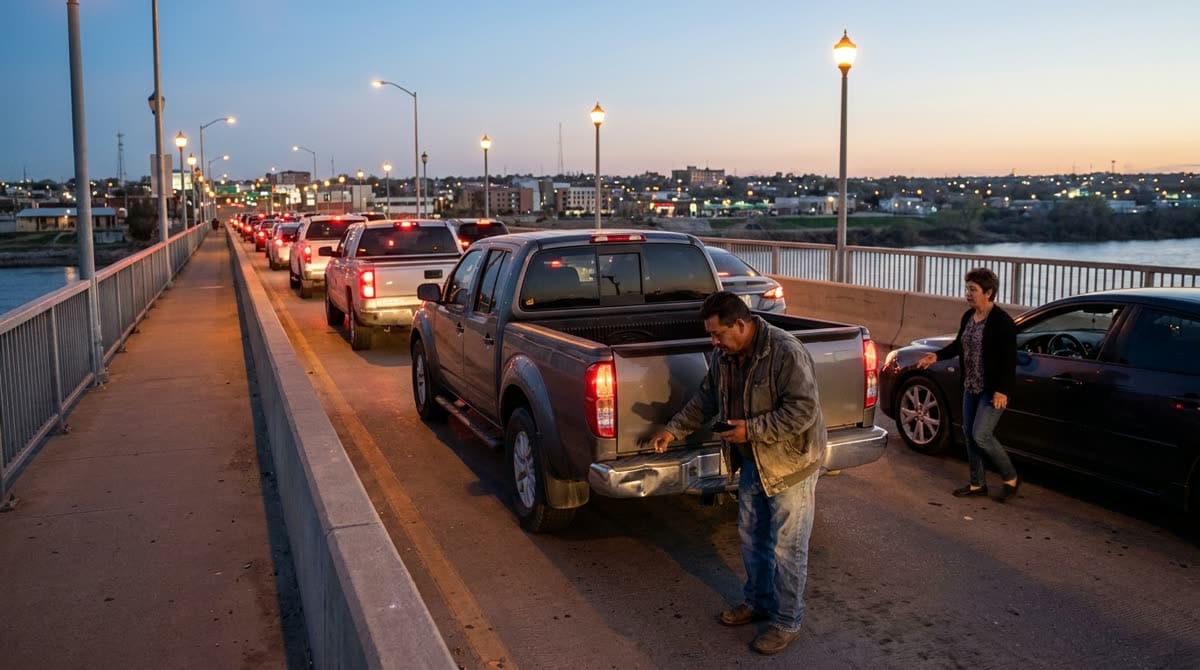
It depends on which side of the bridge the crash happened. On the U.S. side, Texas law applies: the at-fault driver pays and you have 2 years to file. On the Mexican side, Mexican law applies. If a federal government vehicle hit you, the claim goes to the agency first, within 2 years; and if the problem was a defect in the bridge, which the city runs in Eagle Pass, the notice is usually due within 6 months or sooner.
For many people in Eagle Pass, Laredo and Del Rio, crossing the bridge is routine: to work, to school, to see family, to run errands. And in the line, with traffic stopping and starting every minute, minor crashes happen often: a rear-end hit when the driver behind gets distracted, a sideswipe when two lanes merge, someone cutting into the line. What isn't routine is knowing what to do next, because an international bridge raises questions that don't exist in an ordinary crash.
Which law applies if I crashed on the bridge?
The law of the side of the bridge where the crash happened. The river marks the border, and each country has jurisdiction up to that line. In practice:
- On the U.S. side, including the line toward the entry inspection, Texas law applies. The report is made by the authorities on this side, the at-fault driver pays, and the general deadline to sue is 2 years.
- On the Mexican side, Mexican law applies, with its own authorities and insurance rules. We only handle cases in Texas, so in that case it's best to get advice in Mexico.
Because the exact spot decides everything, write down or photograph where the vehicles ended up: how close to the toll booth, the port of entry or the middle of the bridge. If there's doubt about which side it was, that detail becomes the first argument in the case.
Who pays if the crash was on the Texas side?
Just like on any Texas street, the driver who caused the crash pays, usually through their insurance. In a rear-end crash in the line, the driver behind is almost always at fault, because they had to keep their distance. But on the bridge there are three situations that change the claim:
1. A car with Mexican plates hit you
It happens a lot in the entry line. The problem is that many Mexican policies only cover inside Mexico. If the other driver's policy doesn't include U.S. coverage, their insurer won't pay, and what protects you is your own uninsured/underinsured motorist coverage (UM/UIM) and your PIP. Photograph the entire policy, not just the card.
2. A tractor-trailer or commercial truck hit you
Tractor-trailers cross the Camino Real bridge in Eagle Pass and the commercial bridges in Laredo all day long. Trucking companies that cross with cargo must carry insurance valid in the United States, and when the driver is on the job, the company answers for them. Photograph the company name, the USDOT number and the unit number.
3. A federal government vehicle hit you
Federal agency vehicles operate near the port of entry. If one of them caused the crash, you don't file against it like a private driver: first you have to present an administrative claim to the agency within 2 years, with a specific amount. The agency has 6 months to respond, and only then can you sue. A claim filed incorrectly can sink the case, so it's worth having a lawyer from the start.
In Eagle Pass, the City runs the U.S. side of both international bridges. If you were hurt by a defect in the bridge, such as a pothole, a damaged barrier or a toll gate arm that came down on your car, the claim is against a local government, and Texas law requires written notice, generally within 6 months. Some cities require less. If that notice is missed, the right to file can be lost.
What to do if you crash in the bridge line
- 1Turn on your hazards and stay in your lane. There's no shoulder on the bridge, so don't step out into traffic if it isn't safe.
- 2Ask for a report. Alert bridge staff or call 911. Without a report, in a place where everyone is in a hurry to cross, it's your word against theirs.
- 3Photograph the exact location: where the vehicles ended up relative to the toll booth, the inspection area or the middle of the bridge.
- 4Photograph the other driver's entire policy, their license and plates, especially if they're from Mexico.
- 5Get witness information. The line is full of stopped cars watching everything, but they leave as soon as the line moves.
- 6Ask about cameras. An international bridge has cameras everywhere. Some footage can be requested, but it isn't kept forever: move quickly.
- 7Get medical care that same day or the next, even if the impact was at low speed. Whiplash usually shows up hours or days later.
Don't wait until it's clear which side it was or who pays. At Ruiz & Associates we send you to the doctor: we connect you with doctors who treat you now and get paid at the end of your case.
What if I'm a pedestrian and got hurt on the bridge?
Eagle Pass's Bridge I, the downtown bridge, has pedestrian walkways, and many people cross on foot every day. If you were hit by a car on the Texas side, Texas law applies as on any street. If you fell because of a broken walkway, a damaged step or poor lighting, it may be a claim against whoever runs the bridge, and the short notice to the city explained above applies.
How long do I have?
- Against another driver, on the Texas side: generally 2 years from the crash.
- Against a federal government vehicle: the administrative claim to the agency, within 2 years.
- For a defect in the bridge or a city street: written notice, generally within 6 months, sometimes less.
And even when the legal deadline is long, the bridge evidence disappears fast: the vehicles move within minutes, witnesses cross and video gets overwritten.
How Ruiz & Associates helps
For more than 30 years we've worked on the border, with our office in Eagle Pass, handling cases from Eagle Pass, Laredo, Del Rio and all of Southwest Texas. We know how to pin down which side the crash happened on, find the coverage that actually pays, file against the company if it was a truck, and submit notices on time when government is involved. We speak Spanish, we answer personally, and we work on contingency: you pay nothing unless we win your case. The consultation is free and confidential.
Frequently asked questions
I crashed on the international bridge. Does Texas or Mexican law apply?+
It depends on the side where it happened. On the U.S. side, including the line toward inspection, Texas law applies. On the Mexican side, Mexican law applies. That's why you should photograph where the vehicles ended up.
A car with Mexican plates hit me in the bridge line. Who pays?+
Their insurer, only if their policy covers the United States. If not, your own uninsured motorist coverage and your PIP can pay your medical bills and wages. Photograph the entire policy.
What if a government vehicle hit me near the port of entry?+
If it's federal, an administrative claim goes to the agency first, within 2 years, with a specific amount. The agency has 6 months to respond before you can sue.
I was hurt by a defect in the bridge. Can I file a claim?+
There may be a claim against whoever runs it, which in Eagle Pass is the City on the U.S. side. Written notice is required, generally within 6 months, so don't wait.
What does it cost to have my case reviewed?+
Nothing. The consultation is free and confidential, and we only get paid if we win your case.
Is this your case? We cover it in depth
Every city has its own roads, hospitals and courts. If your accident happened in one of these, here's what applies where you are:
Were you in an accident? Tell us what happened.
Free, confidential consultation. No fee unless we win. Bilingual team available 7 days a week.
This article is for informational purposes only and does not constitute legal advice. Every case is different; past results do not guarantee future outcomes. Reading this content does not create an attorney-client relationship.