Slip and Fall Lawyer in Texas
Falls in stores, restaurants, gas stations and apartment complexes across Eagle Pass and Southwest Texas. More than 30 years making the responsible party answer.
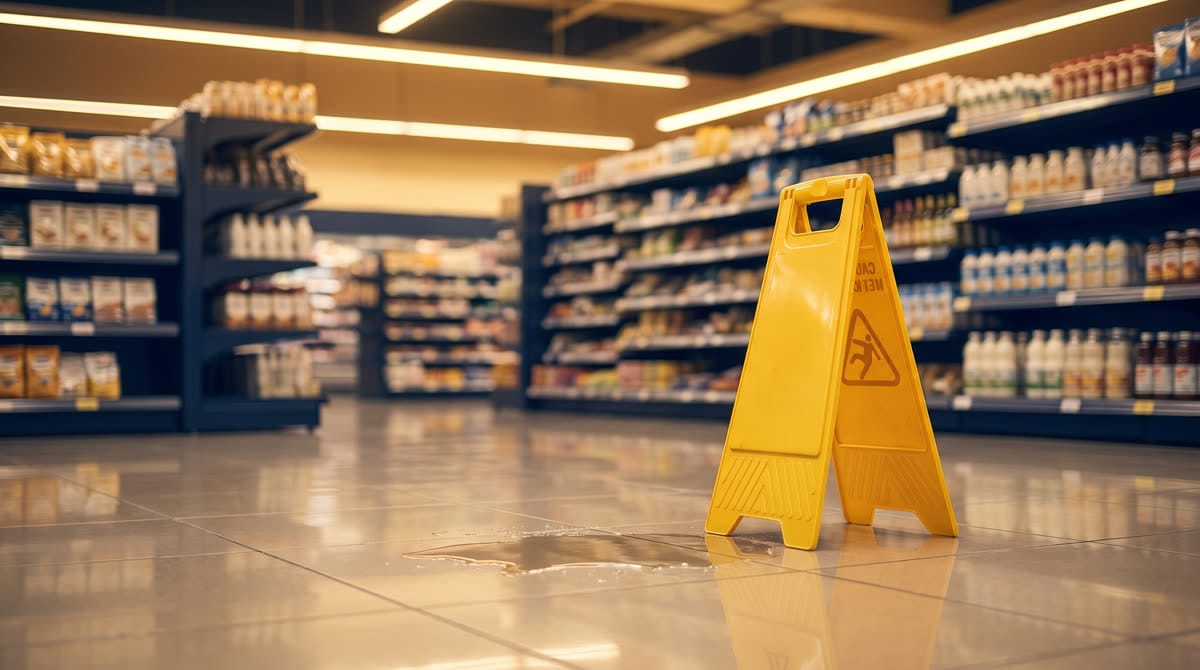
In Texas, a property owner or operator is liable for your fall if they knew — or should have known — about the hazard and neither fixed it nor warned you. A wet floor with no sign, a broken step, potholes in a parking lot or poor lighting all count. The case turns on proving how long the hazard was there, and that proof — especially surveillance video — is erased within days. You have 2 years to file; the evidence doesn't last nearly that long.
A fall sounds minor until it happens to you. A hip, a wrist, your back, a blow to the head — and overnight you can't work, can't lift your kids, and the hospital has already sent the first bill.
What almost nobody knows is that the business where you fell has a legal duty to keep the premises reasonably safe for the people who come in. When it doesn't and someone is hurt, it answers for that. It isn't a favor or a lawsuit "for falling down": it's Texas law.
And the reason many people never file is the same one as always: they assume it was their fault, that they "should have been looking," or that taking on a big chain is pointless. Here's how it actually works.
Who is liable for a fall in Texas?
Liability depends on two things: who you were to the property (customer, guest, or someone without permission) and what the owner knew about the hazard. For a customer in a business — most cases — four things have to be shown:
A wet floor, a spill, a curled mat, a broken step, a cable across a walkway, a pothole in the lot, ice, poor lighting on a stairway. Something concrete that made the place unsafe.
This is the heart of the case. "Knew" is easy when an employee caused it or someone had already reported it. "Should have known" depends on how long the hazard had been there: a spill sitting for two hours is very different from one thirty seconds old. That's why video and witnesses matter so much.
No cleanup, no yellow cone, no blocked-off aisle, no repair of something broken for weeks. A "wet floor" sign sitting in the stockroom doesn't count.
The fall and the injury have to come from that condition, and your medical care from day one is what proves it.
If you were visiting a home or an apartment complex, the owner has to warn you of dangers they know about. If you entered without permission, the protection is minimal. Every case is worth reviewing: your relationship to the property isn't always what you assume.
What the business's insurer will say
Big chains have entire departments for these claims, and their arguments are almost always the same. Better to know them before you hear them:
Texas uses comparative negligence: even if you're assigned some fault, you recover as long as it doesn't exceed 50%. And a customer in a store is entitled to assume the floor is safe; nobody has to shop staring at the ground.
Something visible in a photo taken afterward wasn't necessarily obvious in the moment, with the lighting, the distraction of the shelves and the normal pace of shopping. And even a visible hazard has to be addressed if the business knew about it.
That is precisely the question that decides the case, and it's answered by the video, the logged cleaning rounds and the witnesses — not the manager's word. Which is why the video has to be requested immediately.
The incident report is theirs, for them. Give the basic facts, but don't speculate about the cause and don't say "I'm fine." Ask for a copy, and give no recorded statement without a lawyer.
Many fall injuries — back, knee, head — get worse weeks later. Signing a release for the first visit closes your case forever, even if you need surgery afterward.
The evidence that decides these cases
Because the central question is how long the hazard was there, these cases are won by whatever shows the clock. And almost all of it disappears fast:
The strongest proof and the most fragile. Nearly every business overwrites its footage within days or weeks. A lawyer sends a letter demanding it be preserved; if they erase it after that, that itself can be used against them.
The liquid, the mat, the step, the missing cone, the lighting, the height of the drop-off. And your shoes — because they'll say it was the shoes.
Businesses keep records of their rounds. If the last round was three hours earlier, that's "should have known." If they keep no log, that says something too.
Whoever saw the spill before you did, whoever heard the manager say "I was about to clean that." Names are gathered in the moment or not at all.
A fall with no same-day visit is a fall the insurer will call minor. Immediate care protects your health and your case at the same time.
What to do after a fall
In a business, the other side starts building its file the moment you get up off the floor. This is what protects yours:
- 1Report the fall to the manager before you leave, even if you feel fine. Ask them to write an incident report and ask for a copy. Give facts, not causes.
- 2Photograph and film everything before they clean up: the hazard, the area, the lighting, the missing signs, your shoes and clothing.
- 3Get names and phone numbers of witnesses and of the employees who responded. Tomorrow they're gone.
- 4Get medical care the same day. ER or your doctor. Many fall injuries show up later, and the gap between the fall and your first visit is the first thing used against you.
- 5Don't sign anything or give a recorded statement to the business's insurer. Not even "just for the file."
- 6Keep the shoes you were wearing, unwashed. They will come up.
- 7Talk to a lawyer within days, not months. The video erases itself, and the preservation letter has to go out first.
What can be claimed
Every case is different and nobody serious can quote you a number up front. Generally, a fall claim can include:
- Past medical expenses and anticipated care (therapy, surgery, follow-up)
- Wages lost while you couldn't work
- Loss of earning capacity, if the injury leaves you limited
- Physical pain and suffering
- Mental anguish
- Physical impairment or disfigurement
How long do I have?
In Texas you generally have 2 years from the date of the fall to file an injury lawsuit. That sounds like plenty.
But in a fall case the legal deadline is more misleading than in any other: the video overwrites in days, the floor gets fixed within a week, the employee who saw everything changes jobs, and the cleaning logs get filed away. By the time the deadline approaches, the proof that the business "should have known" no longer exists.
The real window to act well is measured in days.
Why people call us for these cases
Nothing out of your pocket. We only get paid if we win your case.
No health insurance? We connect you with doctors who treat you now and get paid at the end of your case.
The preservation letter goes out as soon as we take the case. It's the difference between having the proof and having the manager's word.
More than 30 years across the table from corporate insurers. We know what they ask for, what they hide and what they have to turn over.
Your case is handled in your language, by the people actually handling it — not a case manager you never meet.
In Texas anyone injured by another's negligence can file, and what you tell us is protected.
Frequently asked questions
I fell in a big chain store. Can I really file against them?+
Yes. Big chains have the same duty as any business to keep the premises safe for customers, and they carry commercial insurance precisely for this. What changes is that they react fast — so you have to as well.
There was no wet-floor sign. Does that help me?+
A lot. The absence of a warning is one of the clearest ways to show the business didn't do what was reasonable. Photograph the area before they set out a cone after your fall — because they will.
The manager said it had just happened. Is it over?+
No. That's what they always say, and it's exactly what the video and the cleaning logs confirm or contradict. That's why the video has to be requested immediately, before it's erased.
They say it was my fault for not looking. Can I still recover?+
Generally yes. Texas uses comparative negligence: as long as your share of fault doesn't exceed 50%, you recover, reduced by your percentage. And a customer is entitled to expect a safe floor.
I fell at an apartment complex, not a store. Does it apply?+
It applies, with nuances. If you were a tenant or an invited visitor, the owner has to keep common areas safe and warn of dangers they know about — stairways, lighting, broken sidewalks. Worth reviewing.
What does it cost to have my case reviewed?+
Nothing. The consultation is free and confidential, and we only get paid if we win. If you need medical care and have no insurance, we connect you with doctors who treat you now.
Fell on someone else's property? Let's talk today.
Free, confidential consultation. No fee unless we win. The video is erased within days — the sooner we talk, the more we can preserve.
We cover Southwest Texas from Eagle Pass and we come to you. Every city has its own hospitals, agencies and courts — if your fall happened in one of these, here's what applies where you are:
Guides that may help you
This page is for informational purposes only and does not constitute legal advice. Every case is different; past results do not guarantee future outcomes. Reading this content does not create an attorney-client relationship.